|
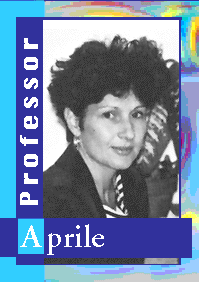
The Aprile Group uses liquid xenon (LXe) to detect and image radiation from a variety of physics phenomena in astrophysics and particle physics. Prof. Aprile has been involved for many years in the development of cryogenic noble liquid detectors and has carried out, with her students, postdocs and colleagues from around the world, many measurements of the properties of liquid argon (LAr), liquid krypton (LKr), and LXe (see some selected publications). Currently the group is focused on the XENON Dark Matter Experiment, while continuing R&D to improve the performance of noble liquid time projection chambers, with a special emphasis on combining the ionization and the VUV scintillation from these materials for precise energy measurement and imaging. |
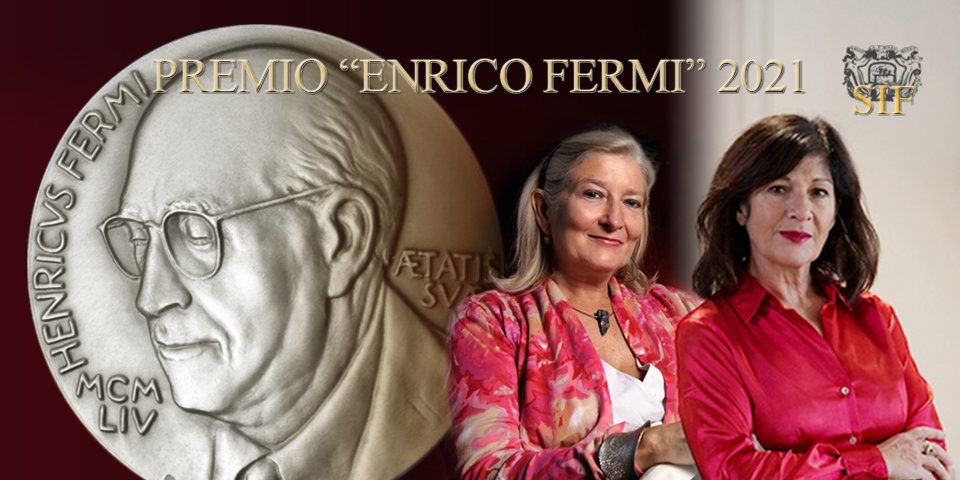
Fermi price 2021 for the study of the universe awarded to prof. Elena Aprile
The 2021 Fermi Price for the Study of the Universe was awarded by the Italian Physics Society to:
Elena Aprile, "for her pioneering research on the properties of liquid xenon for radiation detection and her contribution to the search for dark matter",
and Patrizia Caraveo, "for being a world leader for high energy emission from neutron stars and for her contribution to the identification of Geminga".
Article (English below the Italian)
Elena Aprile, "for her pioneering research on the properties of liquid xenon for radiation detection and her contribution to the search for dark matter",
and Patrizia Caraveo, "for being a world leader for high energy emission from neutron stars and for her contribution to the identification of Geminga".
Article (English below the Italian)
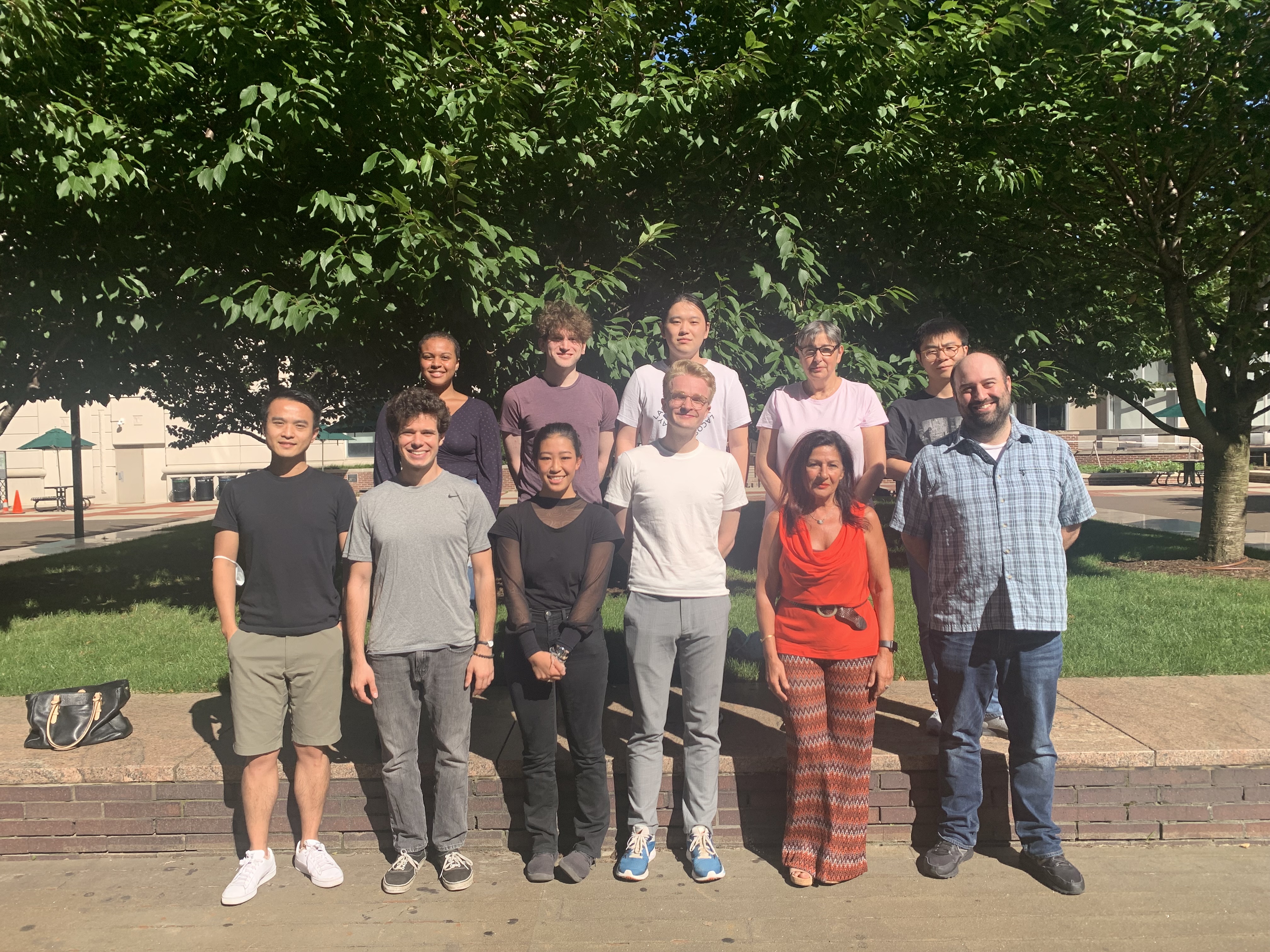
The Aprile group photograph - June 2021
Clockwise from upper left: Amalia Badohu, Salvatore Zerbo, Zihao Xu, Marcela Stern, Tianyu Zhu, Guillaume Plante, Elena Aprile, Knut Dundas Morå, Nadine Wong, Joseph Howlett and Jingqiang Ye
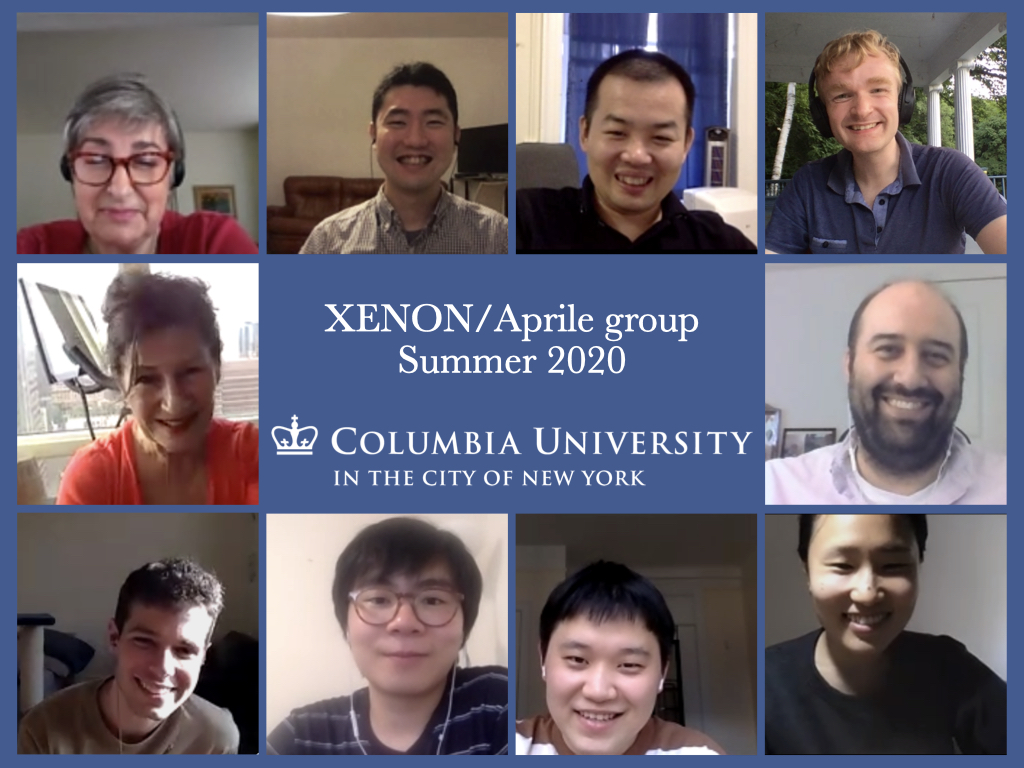
The Aprile Group online group photograph - July 2020
Clockwise from upper left: Marcela Stern, Masatoshi Kobayashi, Fei Gao, Knut Dundas Morå, Guillaume Plante, Jooyun Woo, Zihao Xu, Tianyu Zhu, Joseph Howlett, Elena Aprile
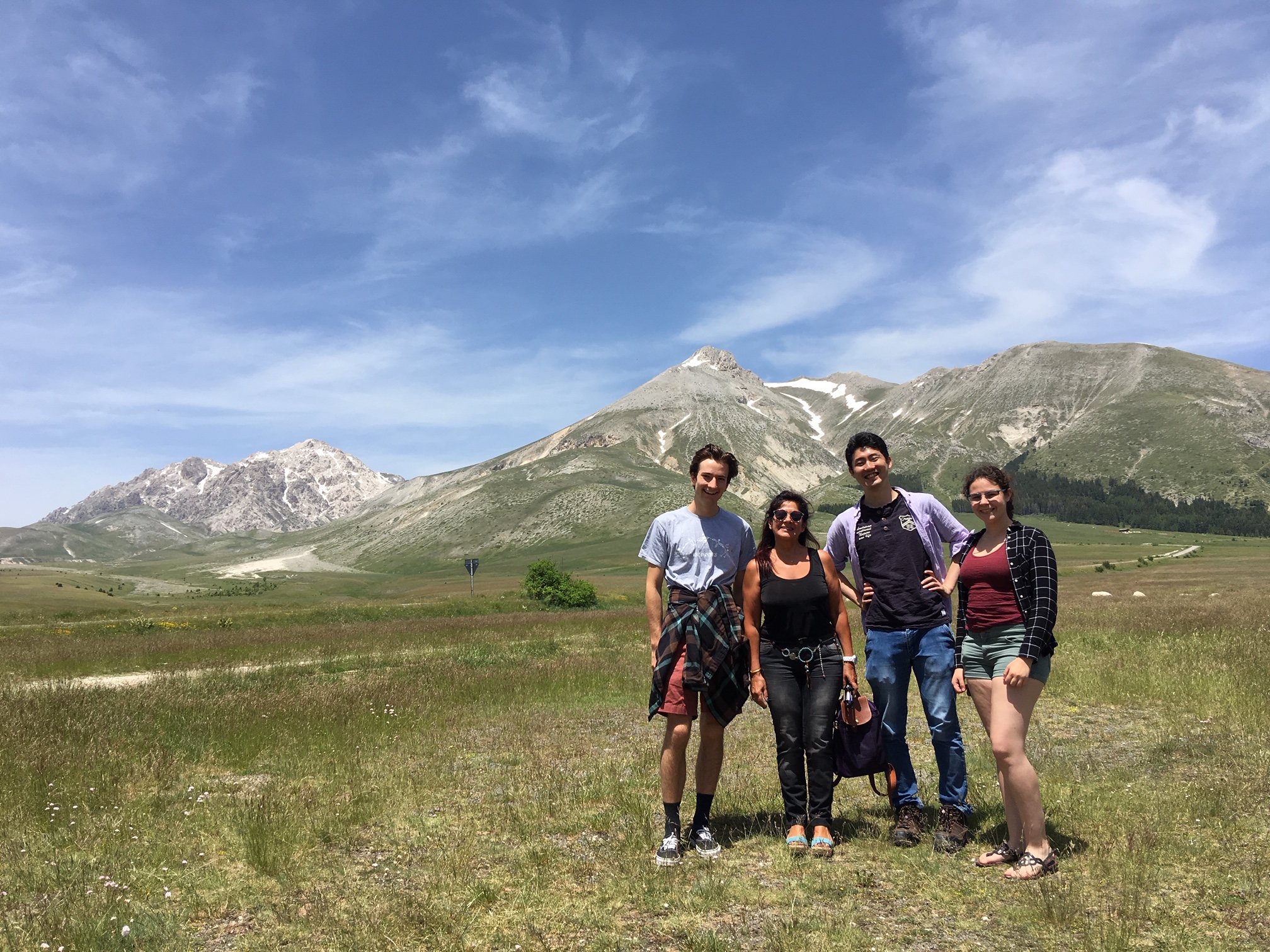
The Aprile Group at LNGS - July 2019
From left to right:
Will Warfield, Elena Aprile,Masatoshi Kobayashi, Amanda Wasserman
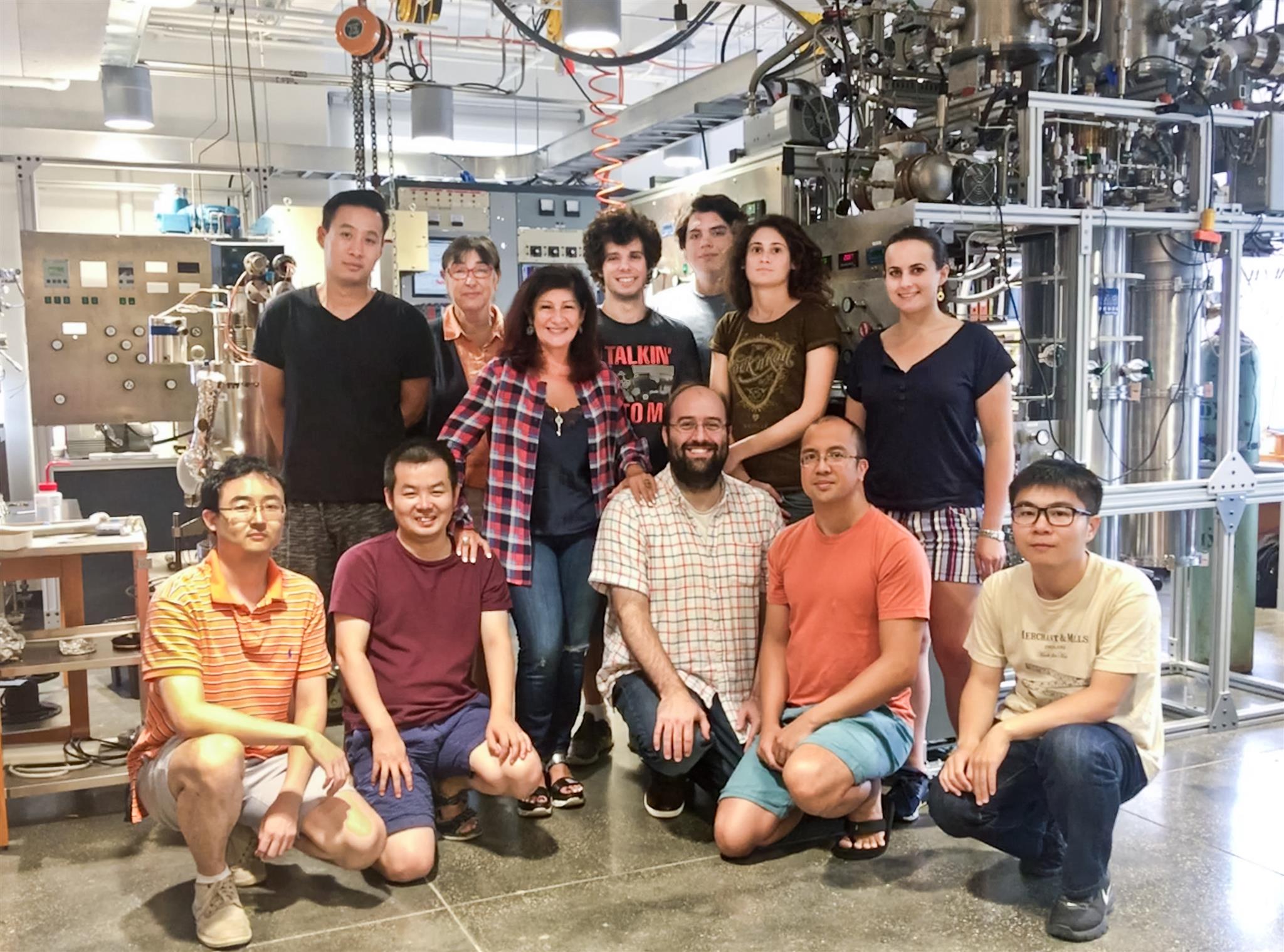
The Aprile Group at Columbia University - July 2018
From left to right:
Yun Zhang, Qing Lin, Fei Gao, Marcela Stern, Elena Aprile,
Joey Howlett, Guillaume Plante,
Mark Almanza (2018 REU Student), Chiara Capelli (Visiting Student, Zurich),
Patrick de Perio, Julia Edsparr (2018 REU Student), Tianyu Zhu.
Not shown: Zach Greene, Danilo Tatananni, Roberto Corriere, Alfio Rizzo
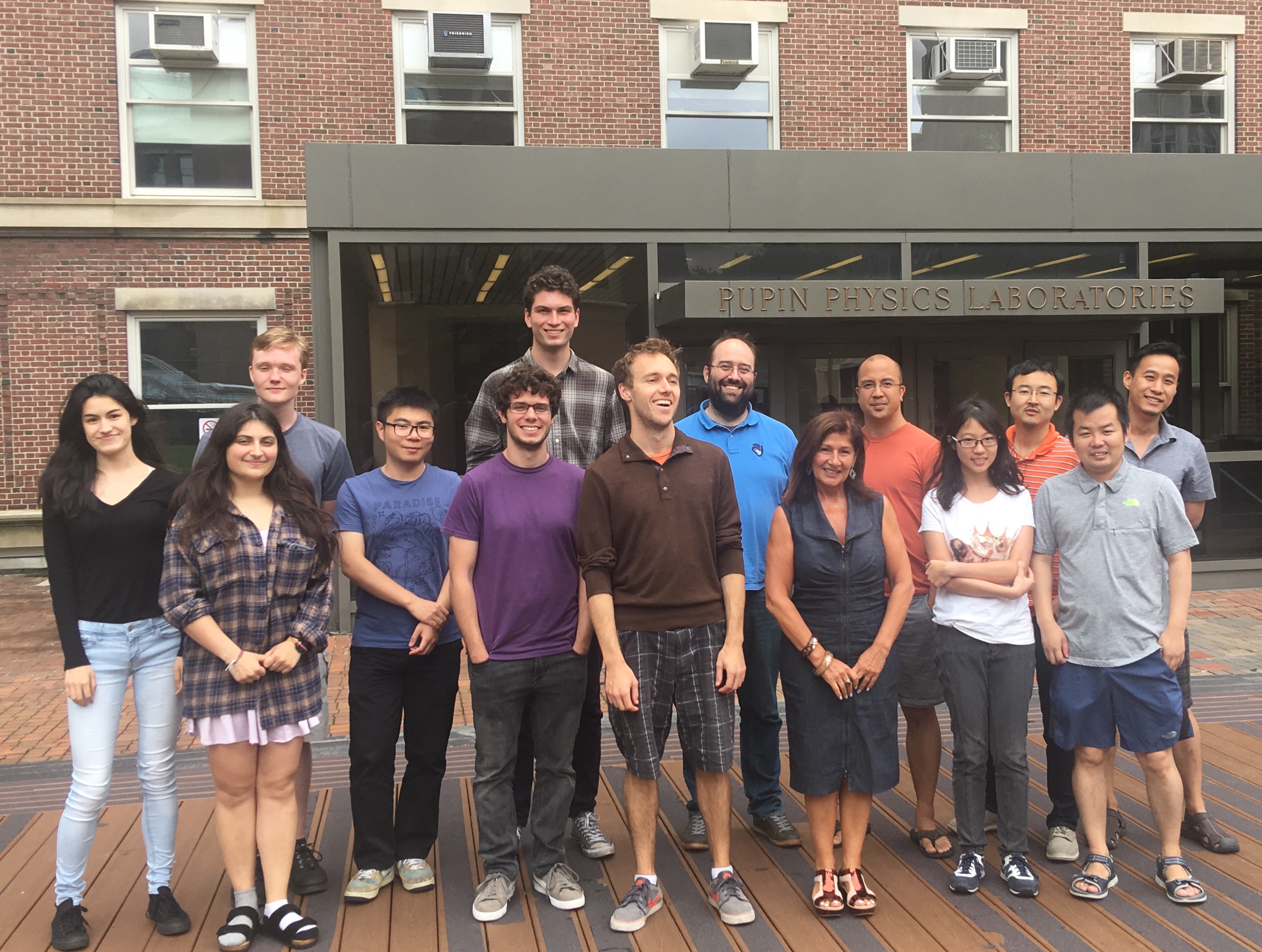
The Aprile Group at Columbia University - July 2017
From left to right:
Lin Collins (Summer Student, Barnard College),
Olenka Jain (2017 REU Student), Malcolm Wells (Summer Student, Columbia U.),
Tianyu Zhu, Joey Howlett, Alexander Shaw (2017 REU Student),
Zach Greene, Guillaume Plante, Elena Aprile, Patrick de Perio,
Xinyan Tong (Summer Student, Peking University), Yun Zhang, Fei Gao, Qing Lin.
Not shown: Marcela Stern, Matt Anthony, Damon Daw, Marcello Messina, Danilo Tatananni,
Roberto Corriere, Alfio Rizzo
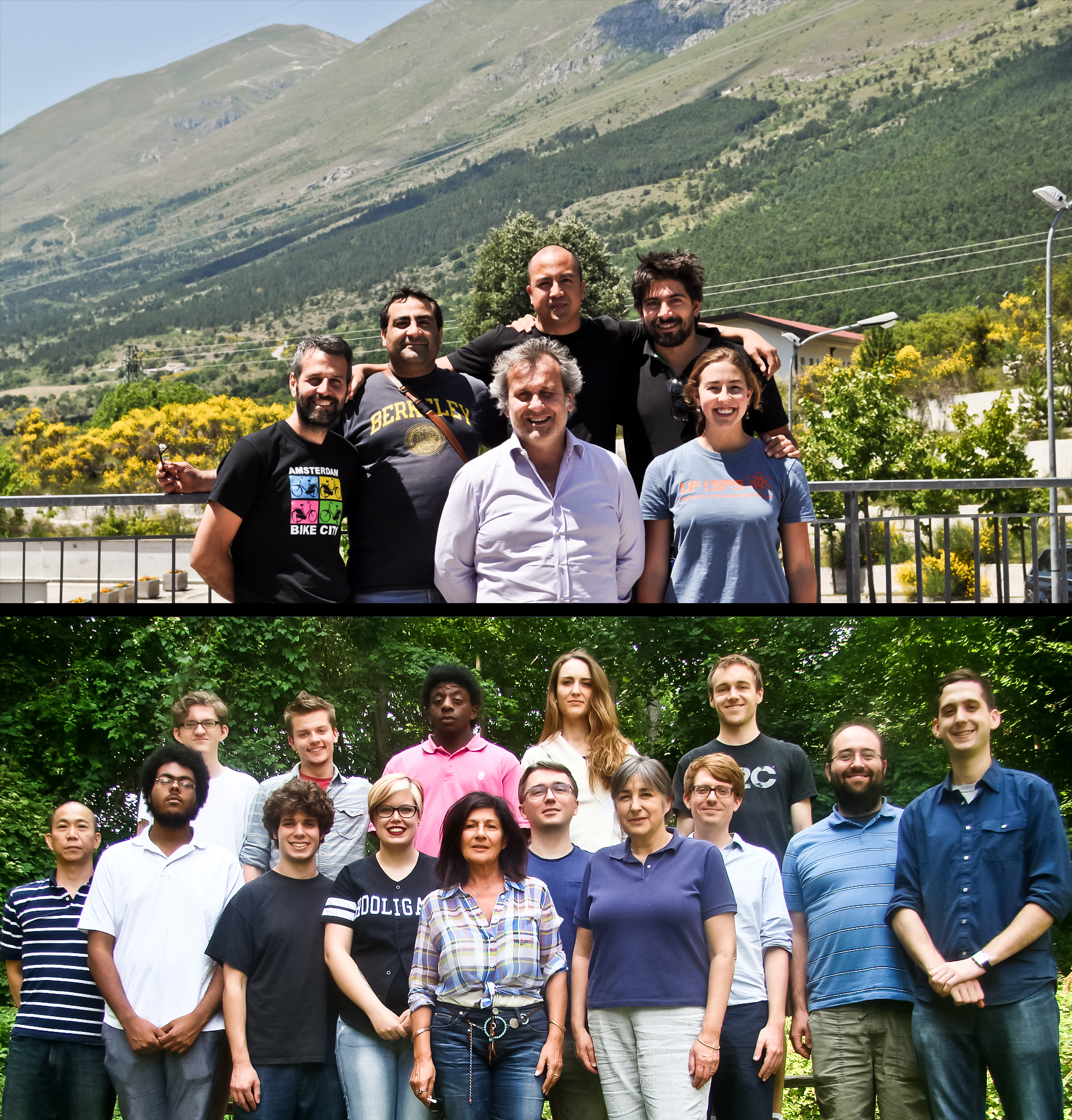
The Aprile Group at LNGS (top) and Nevis Lab (bottom) - July 2015
Top photo from left to right:
Roberto Corriere, Alfio Rizzo, Marcello Messina, Patrick de Perio, Danilo Tatananni,
Cameo Lance (2015 REU Student);
Bottom photo from left to right: Junji Naganoma (Rice University), Hassan El Tinay
(Summer Student, Columbia U.),
Evan (Summer Student, high school), Joey Howlett, Zachary Richards (Summer Student, Columbia U.),
Ashton Rutkowski (2015 REU Student), Collin Francis (Summer Student, Columbia U.),
Elena Aprile, Andre Loose, Isabella Johansson (Summer Student, Columbia U.), Marcela Stern,
Marc Weber, Zach Greene, Guillaume Plante, Matt Anthony.
Not shown: Petr Shagin (Rice University), Richard Wall (Rice University), Luke Goetzke,
Yun Zhang, Cheng Zhang (Summer Student, Peking University)
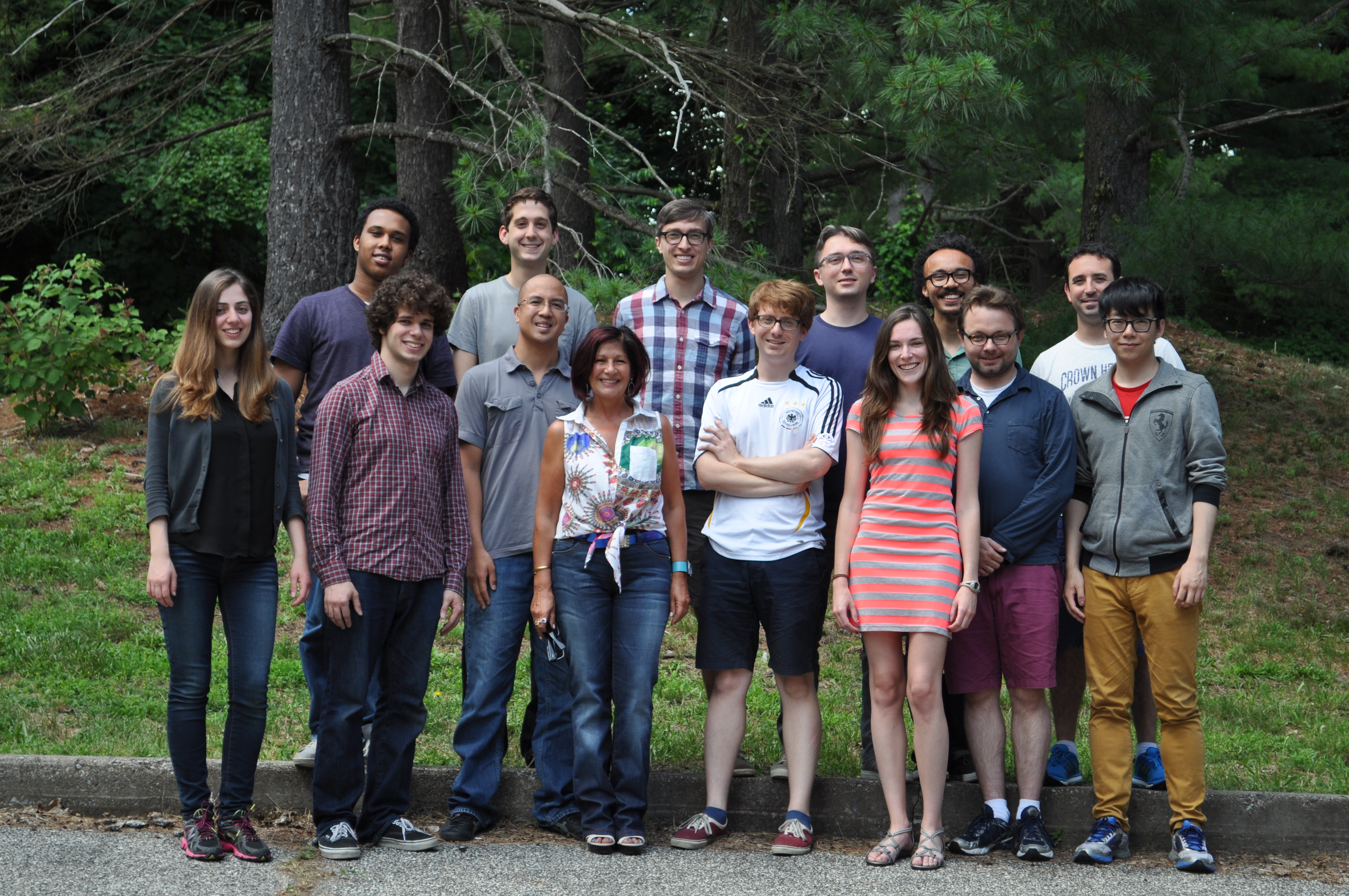
The Aprile Group at Nevis Lab - Summer 2014
Top photo from left to right:
Haley Powlow (2014 REU Student), Gedion Metaferia (Summer Student, Columbia U.), Joey Howlett,
Matt Anthony, Patrick de Perio, Elena Aprile, Luke Goetzke, Marc Weber, Andre Loose,
Catherine Bina (2014 REU Student),
Hugo Contreras, Richard Wall (Rice University), Antonio J. Melgarejo, Alvin Peizhe Li.
Not Shown: Petr Shagin (Rice University), Junji Naganoma (Rice University), Guillaume Plante,
Marcello Messina, Alfio Rizzo, Zach Greene, Yun Zhang
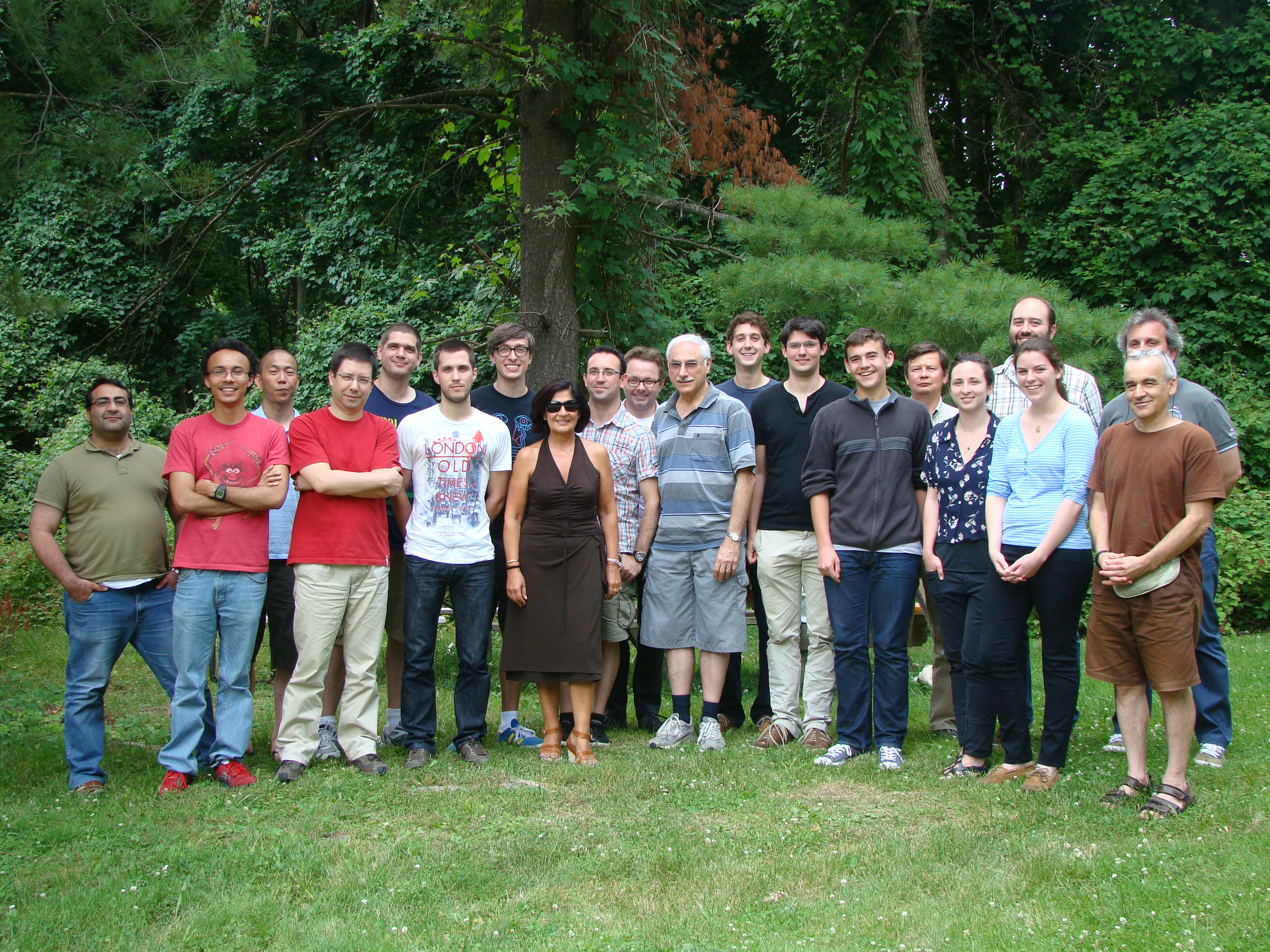
The Aprile Group at Nevis Lab - Summer 2013
From left to right: Alfio Rizzo,
Hugo Contreras, Junji Naganoma (Rice University), Joao Cardoso, Ran Budnik, NOT_SURE, Luke Goetzke,
Elena Aprile, Antonio J. Melgarejo, Richard Wall (Rice University), Lorne Levinson, Matt Anthony,
Peter Barrow, NOT_SURE, Petr Shagin (Rice University), Rosie Hood, Guillaume Plante,
NOT_SURE, Marcello Messina, NOT_SURE.
Not Shown: David Spierings
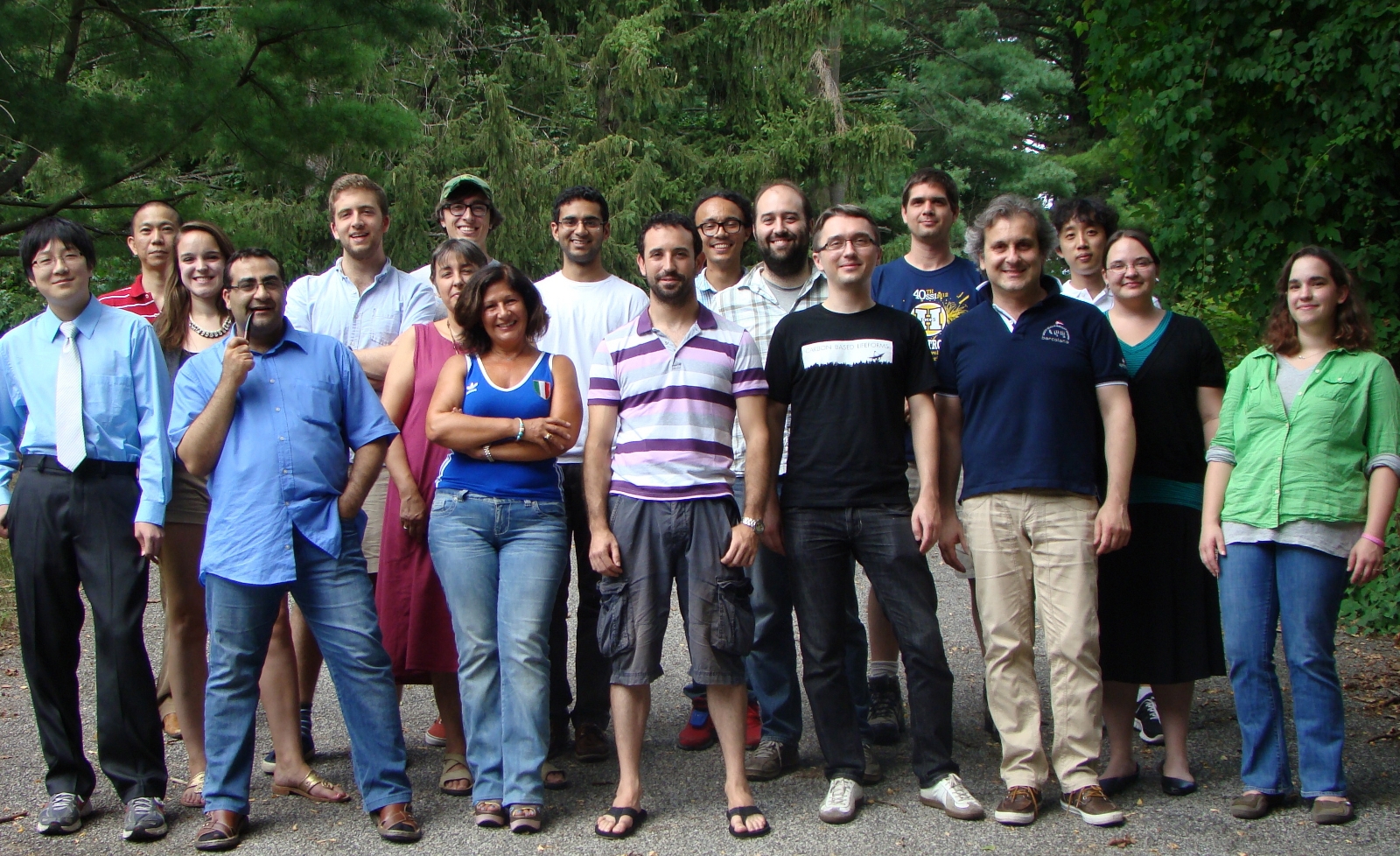
The Aprile Group at Nevis Lab - Summer 2012
From left to right:
Albert Hsiung (2012 REU Student), Junji Naganoma (Rice University), Julia Ziac (2012 REU Student),
Alfio Rizzo, NOT_SURE, Marcela Stern, Luke Goetzke,
Elena Aprile, Munna Uppal (2012 REU Student),
Antonio J. Melgarejo, Hugo Contreras, Guillaume Plante, Andre Loose,
Ran Budnik, Marcello Messina, Tae-Hyun Yoon, Ashleigh Lonis (2012 REU Student),
Victoria Merten (2012 REU Student)
Not Shown: Petr Shagin (Rice University)
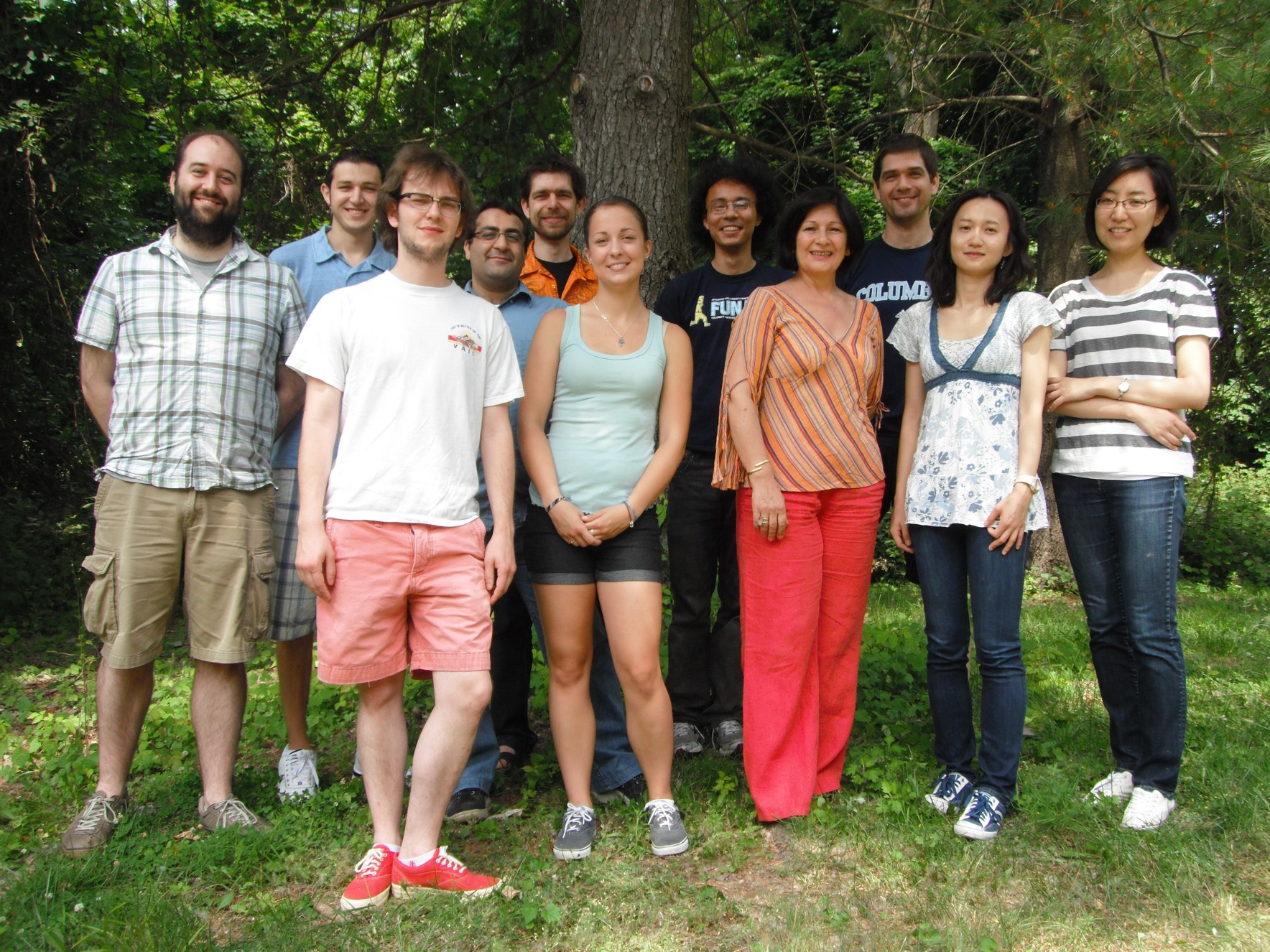
The Aprile Group at Nevis Lab - Summer 2011
From left to right: Guillaume Plante,
Christopher Stevens (2011 REU Student), Nathan Holman (2011 REU Student), Alfio Rizzo,
Rafael Yang, Kristin Hannings (2011 REU Student), Hugo Contreras, Elena Aprile, Ran Budnik,
Kyungeun Lim, Bin Choi
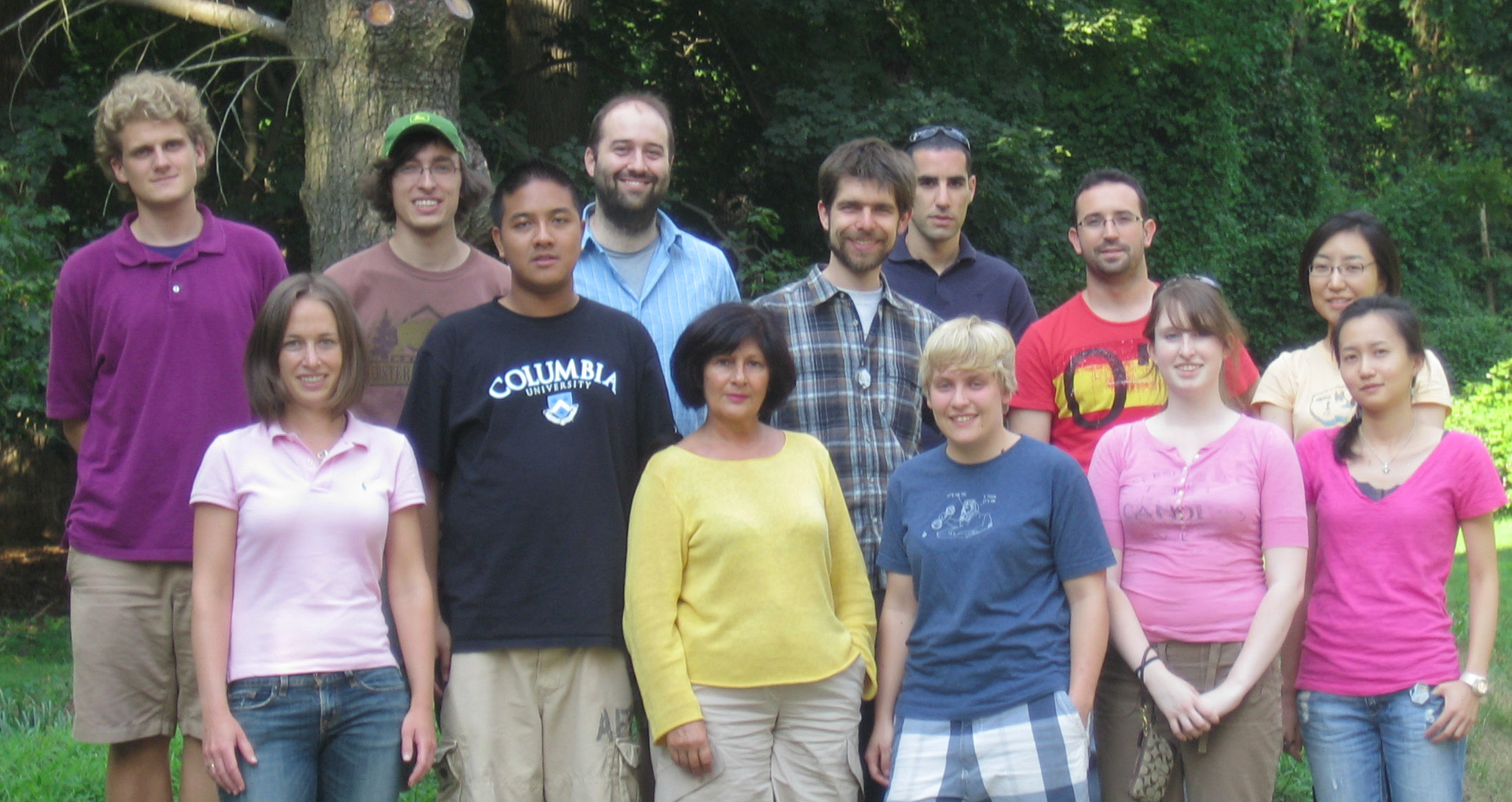
The Aprile Group at Nevis Lab - July 2010
From left to right:
Evan Biederstedt (Summer Student, Columbia U.), Claire Shean Allred, Luke Goetzke, Vladimir S. Lolinco (2010 REU student), Guillaume Plante,
Elena Aprile, Rafael Lang, Ofer Vitells (Weizmann Institute, Israel), Catherine Jolicoeur Lussenhop (2010 REU Student),
Antonio. J. Melgarejo, Christine McLean (2010 REU Student), Bin Choi, Kyungeun Elizabeth Lim.
Not shown: Karl Giboni.
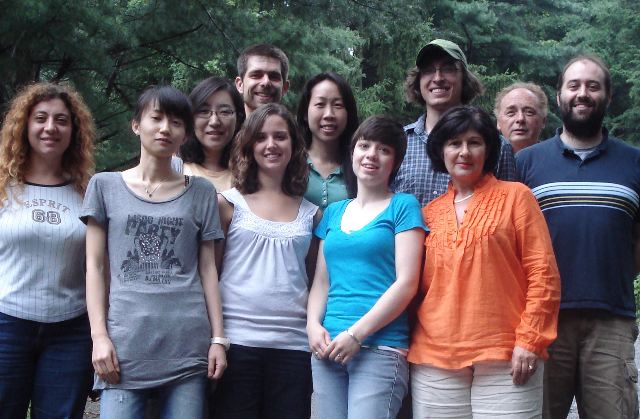
The Aprile Group at Nevis Lab - July 2009
From left to right:
Sonja Orrigo (University of Coimbra, Portugal), Kyungeun Elizabeth Lim, Bin Choi, Rafael Lang,
Emily Altiere (2009 REU student), Karen Chen (2009 REU Student), Cecilia Schudel (Rabi scholar, Columbia U.),
Luke Goetzke, Elena Aprile, Karl Giboni, Guillaume Plante. Not shown: Antonio. J. Melgarejo.
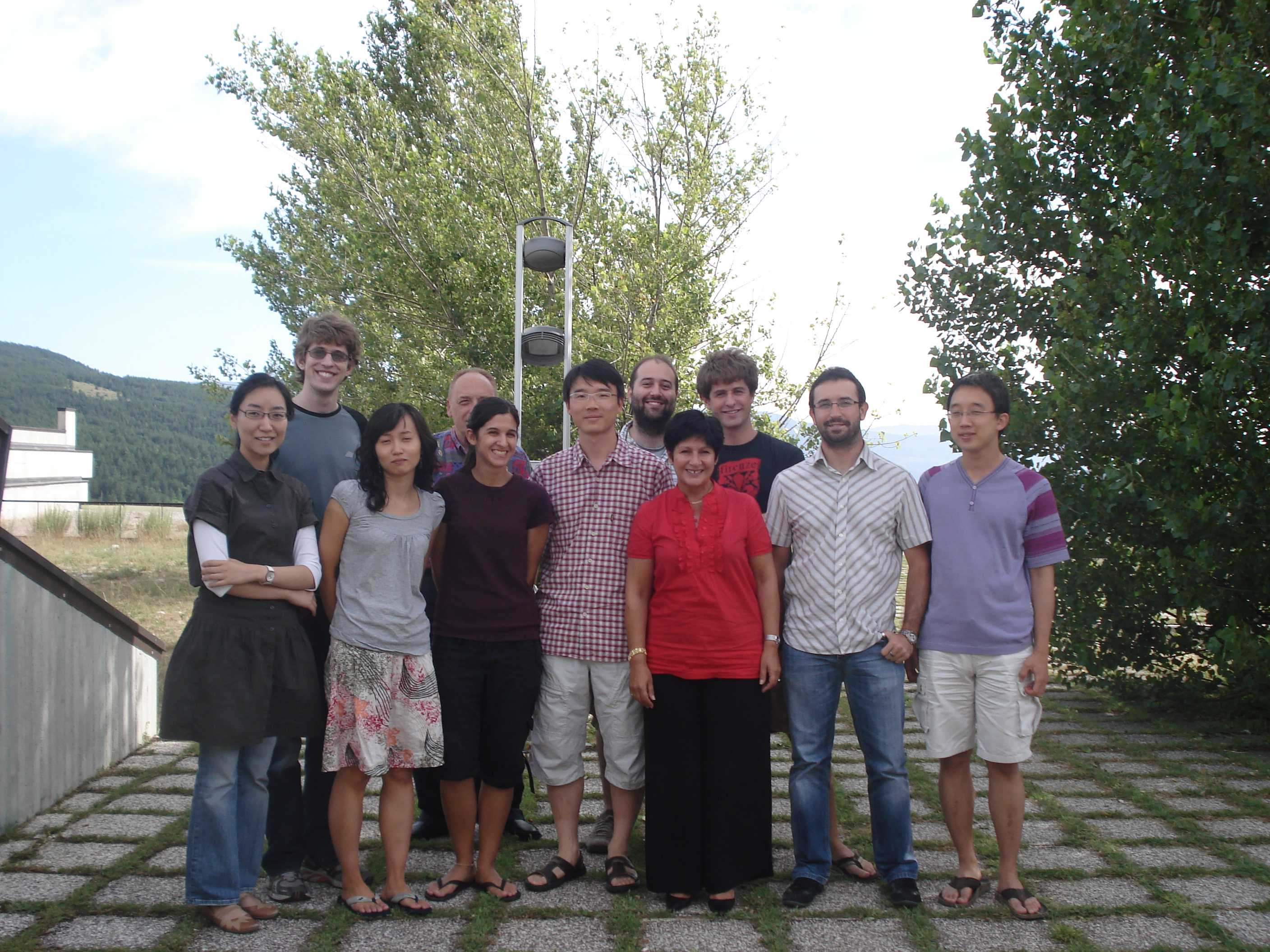
The Aprile Group at Gran Sasso Lab (Italy) - July 2008
From left to right:
Bin Choi, Jason Brodsky (Summer student, Harvard U.),
Kyungeun Elizabeth Lim, Karl Giboni, Gina Buffaloe (2008
REU student) Kaixuan Ni, Guillaume Plante, Elena Aprile,
Andrew Massari (2008 REU student), Antonio Jesus
Melgarejo, Taehyun Yoon.
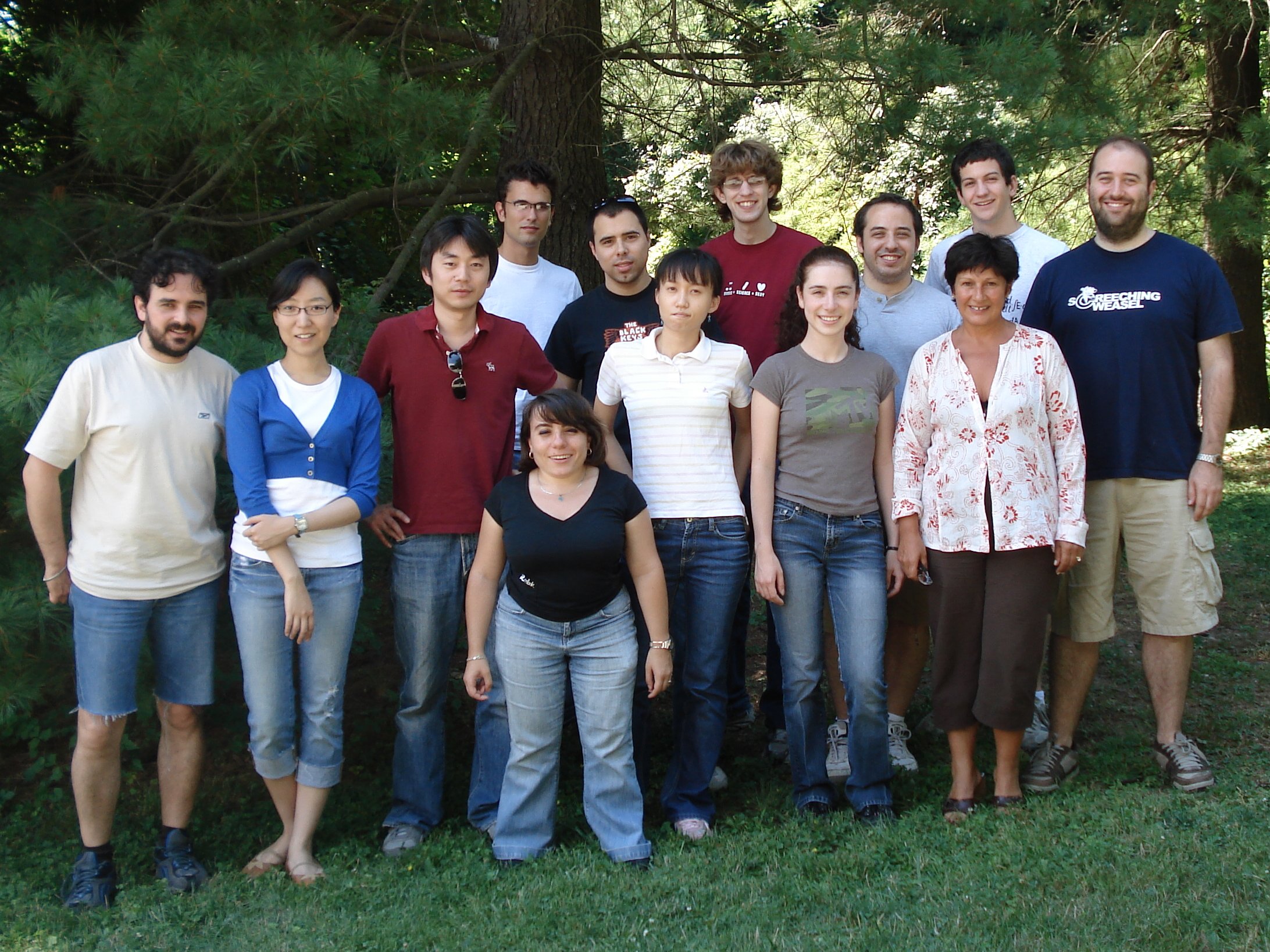
The Aprile Group at Nevis Lab - July 2007
From left to right:
Roberto Santorelli, Bin Choi, Masaki Yamashita, Marc Miskin (2007 REU
student), Maria Elena Monzani, Aaron Manalaysay (U. of Zurich), Kyungeun
Elizabeth Lim, Jason Brodsky (Summer student, Harvard U.), Juliette Alimena (2007 REU
student), Joe Gennaro (Summer student, Columbia U.), Elena Aprile, Corey
Bregman (Rabi scholar, Columbia U.), Guillaume Plante. Not shown: Karl Giboni.
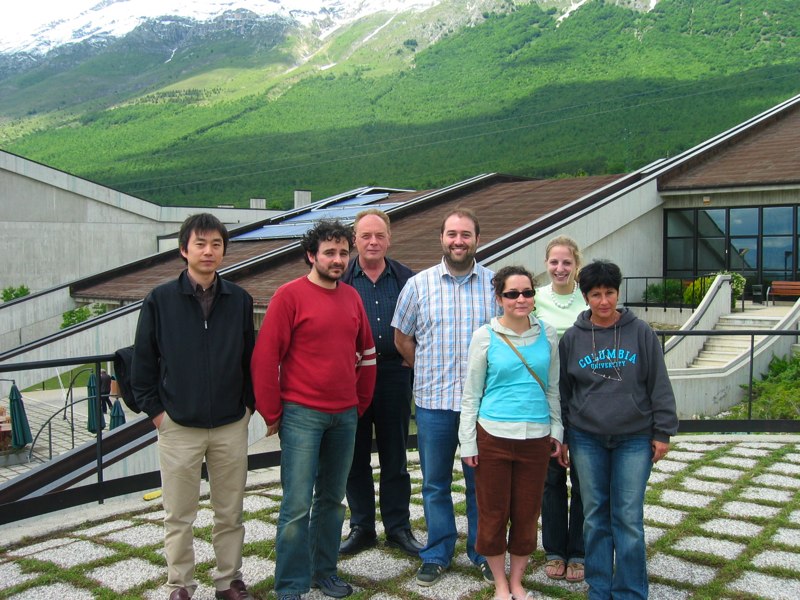
The Aprile Group at Gran Sasso Lab (Italy) - May 2006
From left to right:
Masaki Yamashita, Roberto Santorelli, Karl Giboni, Guillaume Plante,
Hannah Yevick (2006 REU student), Alison Andrews (2006 REU student),
Elena Aprile. Not shown: Maria Elena Monzani.
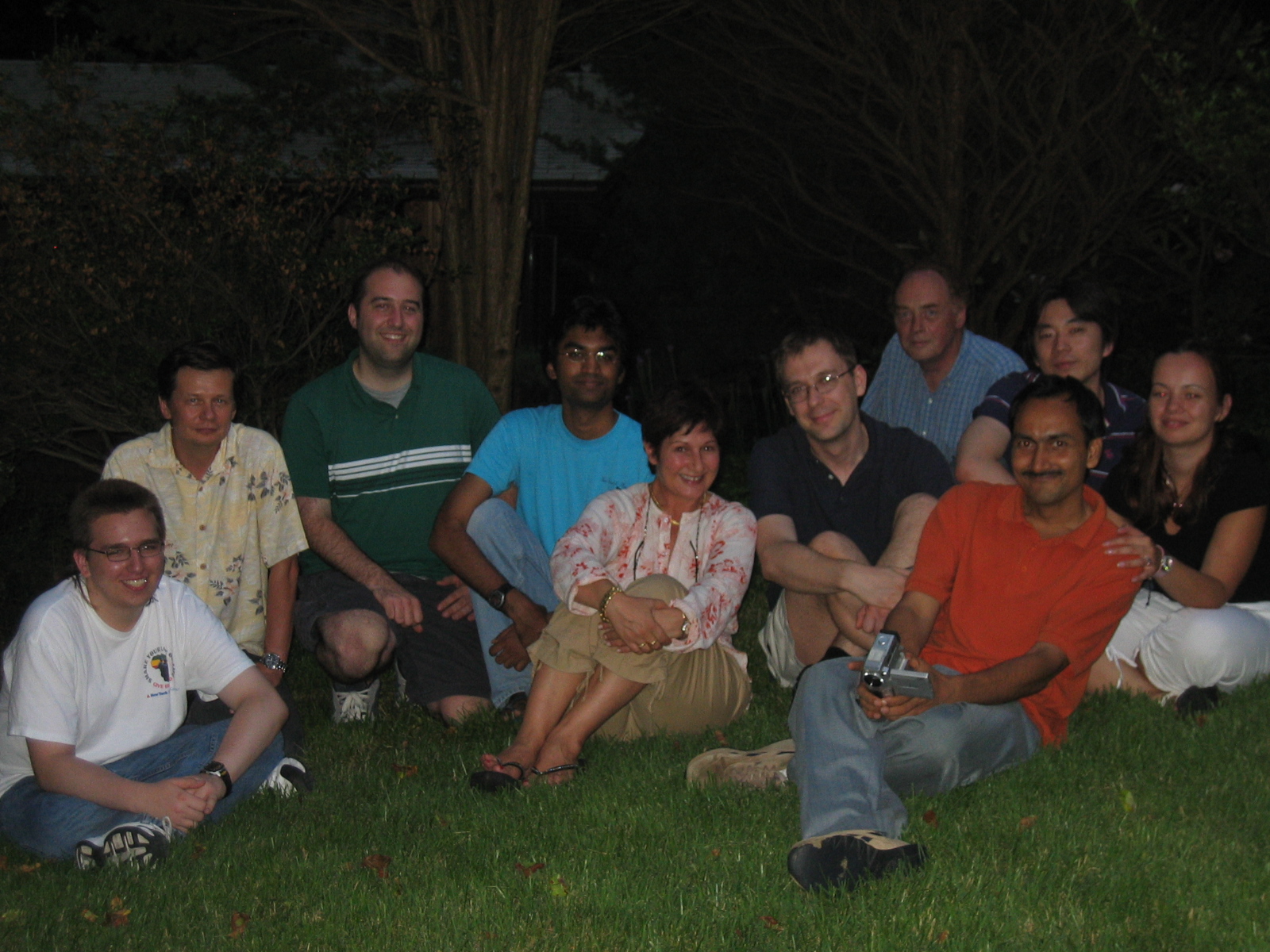
The Aprile Group at Nevis Lab - July 2005
From left to right:
Charles Makanka (2005 REU student), Peter Shagin (now at Rice University), Guillaume Plante,
Aravindhan Sriharan (Columbia College, 2005 Rabi Scholar), Elena Aprile, Pawel Majewski (now
at University of Sheffield, UK), Karl Giboni, Masaki Yamashita (back), Bhartendu Singh (front,
now at Banaras Hindu University, India), Marsela Jorgolli (2005 REU student)